
— The signature classical Harm Reduction methodology. It has been part of Sadar Hati's DNA since 2006 — and continues to be upheld to this day.
Flagship Program · 2024–2026Supported by ViiV Healthcare — Positive Action
ViiV Program Impact
Integrating HIV · Mental Health · Harm Reduction services across East Java.
1,648
unique individuals reached
3,983
accompaniment contacts · one person may be counted more than once
2,117
HIV tests facilitated
368% of project target
“Unique individuals” and “contacts” are not added together — the same person can be served multiple times.
2,027
STI services
1,427
risk assessments · IRA
1,717
group-session participants · GRA
1,683
mental-health screenings
3,069
IEC materials
18
health-facility MOUs · service network
Regional Leader
Top performer in integrating HIV × Mental Health × Harm Reduction — one of 8 ViiV grantees across ASEAN. Hanoi Medical University evaluation, June 2026.
Project period: 26 January 2024 · 24 months · East Java (Year 1 included Jakarta).
See Live M&E Results →The Four Pillars of Our Current Program
Sadar Hati's 4 current operational pillars — with semantic color coding: each pillar has its own color meaning according to its function.
PILLAR 1 · Knowledge Sharing
Education
Chemsex · HIV/AIDS · Mental Health · Drugs — for the communities we support & the wider public
PILLAR 2 · Clinical Service
Testing Service
HIV · IMS · Hepatitis — quarterly testing in collaboration with partner Puskesmas
Pillar 3 · Mental Healing
Counseling
Mental health for chemsex clients — pseudonymized ID, ethics-first
Pillar 4 · Community
FGD · SG · RST
Monthly forum: Focus Group, Support Group, Regular Short Training, Community Liaison
Latest Campaigns & Services
Campaign materials and services we are actively running on the issues of chemsex, HIV, and mental health.
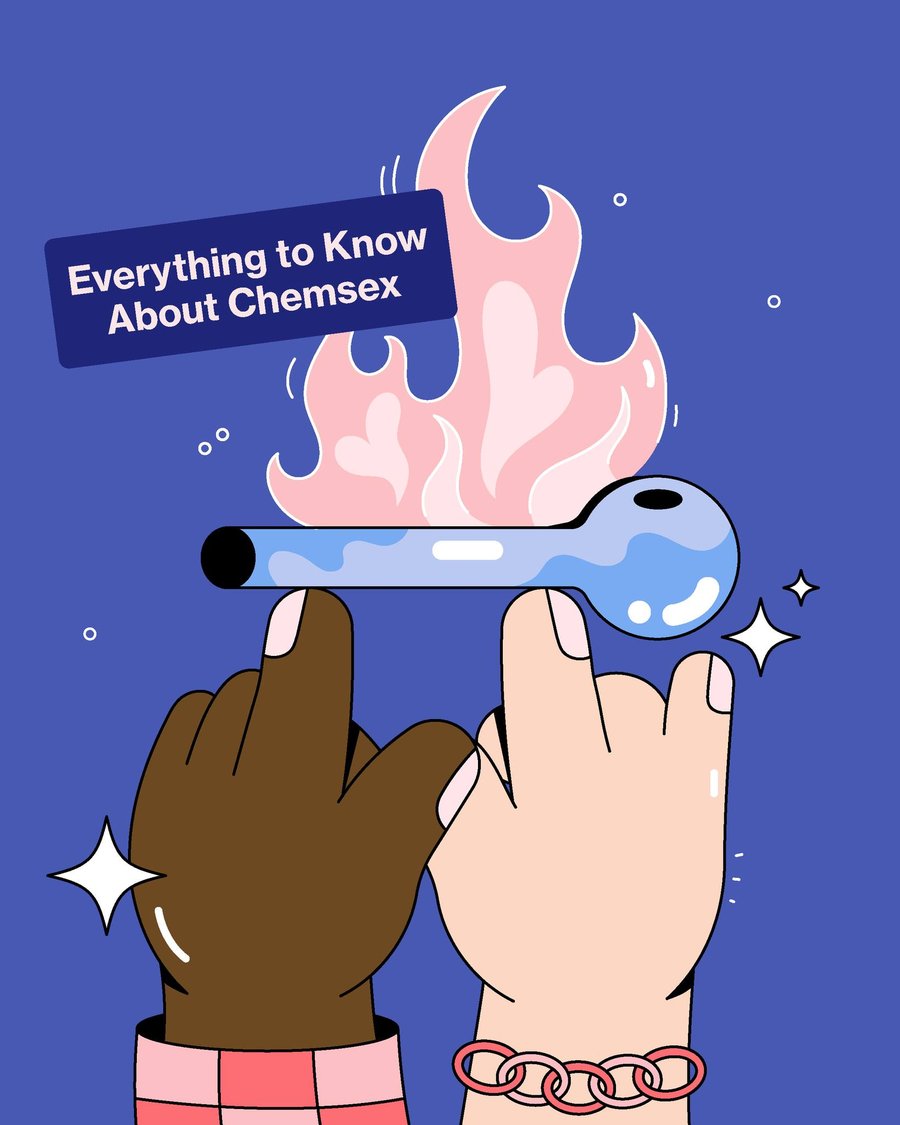
ILOM Strategy — Indigenous Leaders Outreach Model
12 Components of the Harm Reduction Approach
A complete framework of the approach Sadar Hati applies to reduce the harms of injecting drug use. Each component is designed to reach different needs — from first contact in the field, to the continuity of medical and social support for those affected by HIV/AIDS.
- Outreach & Accompaniment — direct outreach to hotspot communities by Field Officers from the community itself.
- KIE — Communication, Information, Education about HIV/AIDS, Hep C, TB, harm reduction.
- Risk Reduction Assessment — individual & group assessment per case for precise intervention.
- HCT — HIV Counseling & Testing, voluntary, with linkage to ARV services.
- Disinfection Program — sterilization of equipment for safe injection practices.
- LJSS — Sterile Needle & Syringe Service to reduce HIV/Hep C transmission.
- Destruction of Used Equipment — collection & safe disposal of needles.
- Drug Dependence Therapy — referral for rehabilitation + long-term recovery support.
- Oral Substitution (PTRM) — Methadone Maintenance Therapy Program at Puskesmas clinics + RSU.
- CST — Care, Support & Treatment for ODHA (People Living With HIV/AIDS).
- Basic Health Services — primary healthcare access via integrated referral.
- Peer Education — peer education by recovering peers, organic knowledge transfer.
Support Group System — A Community Space for Mutual Strengthening
Recovery from drug dependence cannot be done alone. Sadar Hati builds an ecosystem of support groups that provides space to share experiences, remind one another of their change targets, and become role models for each other. Each group meets regularly every month with a facilitator from the community, sometimes bringing in a psychologist, doctor, or police representative as a speaker.
"Want to Stop"
Recovery Path
PWID who want to quit — discussion + mutual support toward behavior-change goals
"Stay Clean"
Role Model
Recovered PWID — becoming role models + mentors for those still struggling
KPK
Peer Care
"We Care for Us" — a space to mutually support positive change processes
Couples Group
Family Support
Partners of PWID — gender · domestic violence · reproductive health · emotion management · child-rearing
🩹
OHIDHA
PLHIV Care
People Living With HIV/AIDS & families — psychologist · doctor · police guest sessions
Multi-Sectoral Historical Scope (2002 — 2014)
Beyond Harm Reduction PWID, Sadar Hati — from its founding era to the HCPI era — carried out 9+ cross-sectoral programs rooted in a single principle: serving vulnerable groups without discrimination. Much of this scope has become important historical context worth remembering — some may be revitalized in line with the new strategic direction.
9+ cross-sectoral programs organized into 3 strategic buckets: Protection & Rights · Literacy & Public Health · Community Empowerment. The multi-sectoral pattern = a signal of Sadar Hati's capacity to serve vulnerable groups from many angles, not a single-issue NGO.
Protection & Rights · Vulnerability Response
ANTI-TRAFFICKING
PTPPO
Prevention of Human Trafficking Crimes · via Diknas partnership 2012
DISASTER RESPONSE
Emergency Response
Scope of disaster emergency response via Diknas technical guidelines 2012
GENDER EMPOWERMENT
Women's Empowerment
Women living with HIV (ODHA) + partners of PWID — political and social rights, life skills, economic empowerment
Literacy & Public Health · Knowledge for All
CHILDREN'S LITERACY
Community Library
Sehati Library (Sukun, Malang) + Lintang Reading House (Sidoarjo · Mba Watiek's project) — book access for underprivileged children
TB ADVOCACY
TB Day Public Action
TB Day street action · TB Training for KPK · TB-HIV co-infection awareness
Economic Empowerment · Self-Sustaining Recovery
VOCATIONAL SKILL BUILDING
Vocational Training Dinsos Partnership
Salted eggs · handicrafts · goat farming · workshop training — a collaboration with the Social Affairs Office for the recovery community toward economic independence
Multi-sectoral insight: 3 buckets = protection · education · empowerment — the pattern of WHO/UNICEF's whole-of-community approach for vulnerable populations. Sadar Hati = institutional capability for cross-sector integration, NOT a single-issue NGO. Revival potential several scopes (literacy, vocational) in line with Ms. Watiek's new strategic direction.
Operational Coverage
Sadar Hati's operational reach is broader than the official narrative: paralegal training capacity, shelter operations, and community engagement at the RT/RW level.
Paralegal Capacity
Legal Advocacy
Sadar Hati had paralegal training program — 78 photos of archival evidence. Legal advocacy for clients facing discrimination, criminalization, or barriers to accessing health services.
Operational Shelter
Pandaan
Sadar Hati Foundation Shelter in Pandaan — 42 outreach photos · confirms operational expansion beyond DIC Malang into Pasuruan Regency
Community Engagement RT/RW
Grassroots
Meeting with RT/RW 9 Gempol · 40 photos · deep community-level engagement — not a top-down NGO, but embedded in the neighborhood structure
KDS (Peer Support Group)
Peer Support
"KDS Training" — 38 photos · Peer Support Group (peer support group methodology) — sister concept to the Support Group system
Public Advocacy Moments — Historical Highlights
Sadar Hati is not only a support-service organization — we are also a public movement for policy change and community awareness. Nine moments spanning 2008-2012.
2008
MRAN — Malang Recovery Action Network
Branded advocacy campaign for recovery community — an early initiative from the pre-HCPI era. The foundation for Sadar Hati's public advocacy identity.
2009
HIV Awareness Fun Walk
Public mass advocacy event in Malang City — involving community + local government. Visual archive 2009.
2009 + 2012
HAS · World AIDS Day
Annual event with KPA Kota Malang + Dinkes. HAS 2012 gathering documented (29 Nov 2012, banner panel speakers).
Sep 2011
Narcotics Briefing by BNK Kota Batu
Sadar Hati as presenter at the Kota Batu Narcotics Agency — deep government engagement.
2011–2012
TB Day Public Action
Street action for awareness TB-HIV co-infection · visual documentation archive brochure folder.
June 2012
Petition on the Fate of PWID
Advocacy ahead of SUM funding cliff USAID — a petition to protect DIC-service access for the communities we support. A milestone moment of resistance in Sadar Hati's history.
2012
Pernas OST · National Forum
Presence in National OST Meeting (Opioid Substitution Therapy) — Sadar Hati in a national forum context.
Cross-Year
Student Seminar-Workshop
Academic engagement + internship matrix with universities for knowledge transfer — Sadar Hati embedded in the academic ecosystem.
2010+
AVA Production
Production Audio-Visual education materials for outreach to high schools & Polda Jatim — an innovative pedagogy approach.
2013 Vision vs Reality — Institutional Resilience Story
The Pre-Strategic-Plan Workshop in Nov 2012 produced an ambitious 2013 plan — then the SUM (USAID) cliff of Feb 2013 changed the landscape. A story of institutional resilience worth preserving for the strategic narrative of donor outreach.
Strategic Vision
2013 — As Planned
HCPI Proposal 2013 (Jan-Dec 2013):
- Outreach + support for PWID in Malang City/Regency + Pasuruan City/Regency
- Field team: 5 PL Malang + 3 PL Pasuruan + 2 PL for couples, supervised by 2 KL
- Continuous hotspot mapping of injecting drug user characteristics
- Development of an integrated PKM/RS referral system (Kesdas · LASS · MMT · HCT · IMS · TB · CST · PMTCT · Condoms)
Pre-Strategic-Plan Workshop 23 Nov 2012:
- 3 TA Providers on-boarded: SATUNAMA (institutional) · Penabulu (financial) · Surveymeter (M&E)
- Strategic shift: PMTCT expansion · PO role shifting to companion
- Plan donor diversification post-SUM
2013 vision scale:
Multi-donor matrix continuation · 9 main activities · regional coverage of Greater Malang + Pasuruan + capability-strengthening expansion
Operational Reality
2013 — What Really Happened
SUM (USAID) Cliff Feb 2013:
- SUM-FHI 360/RTI ended after a pre-warning in July 2012
- 3-month consideration window Nov 2012-Feb 2013 for renewed cooperation did not materialize
- June 2012 Petition on the Fate of People Who Inject Drugs = advocacy to preserve DIC access, but structural funding was lost
Resilience Response:
- HCPI continuation still ongoing (Australian Aid)
- GF Round 8 SR network preserved (Lembaga Paramitra PR)
- BNN PABM ongoing
- 3 TA Provider mentoring successfully strengthened the institution
What is preserved:
Core PWID program · 175-hotspot coverage · Puskesmas network · ILOM methodology · peer worker model · internal M&E data-system stack. Did not collapse — Sadar Hati scaled down but did not lose its DNA.
Lessons Learned for Mba Watiek's 2030 Strategic Planning
Multi-donor diversification = institutional safety net. The 2012 era handled 4 donors simultaneously (HCPI · GF R8 · SUM · BNN) — when the SUM cliff hit, the other 3 donors kept operations sustained. Single-donor dependence = single point of failure.
3 TA Provider engagements · Pre-Strategic-Plan Nov 2012 = institutional capacity preserved to this day. SATUNAMA legal/institutional · Penabulu finance/SOP · Surveymeter M&E methodology — this investment is what sustained Sadar Hati into the ViiV era (2022+).
This pattern should serve as a strategy template for the post-ViiV era: at least 2-3 parallel donors + continuous TA Provider engagement + continuous institutional strengthening.